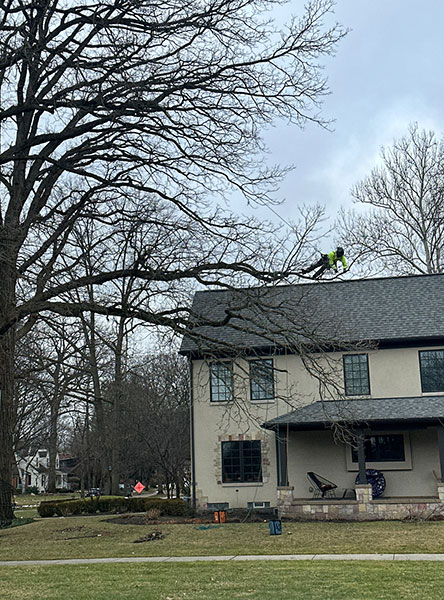
Dead Wooding
Dead wooding removes dead, dying, and diseased branches from trees for three critical reasons: aesthetics (improving appearance and curb appeal), preventative upkeep (cleaning up hazardous limbs before they fall), and liability protection (reducing risk of property damage or injury). A tree full of dead wood is unsafe—branches can fail without warning, especially during storms. We identify and remove all compromised wood, restoring your tree's health, safety, and beauty.
Free alternatives available
Key Benefits
Eliminates falling branch hazards
Improves tree appearance and curb appeal
Reduces liability and property damage risk
Allows healthy branches to thrive
Prevents disease spread to living wood
Enhances safety around property
Preventative maintenance for homeowners
Our Process
Inspection
Thorough inspection to identify all dead or dying wood.
Assessment
We evaluate what needs to be removed.
Removal
Dead wood is carefully removed.
Cleanup
All debris is cleared away.
Frequently Asked Questions
Why should I remove dead wood from my trees?
There are three main reasons: aesthetic (dead branches detract from your tree's appearance), preventative upkeep (removing hazardous wood before it falls prevents costly cleanup and property damage), and liability protection (falling branches can damage property or injure people, creating legal and financial exposure). Regular dead wooding keeps your trees safe, attractive, and reduces risk.
How do I know if a branch is truly dead?
Dead branches are brittle, lack bark or have peeling bark, show no new growth or buds, and snap easily when bent. Dying branches may have partial bark loss or sparse foliage. A certified arborist can accurately diagnose what needs removal versus what can be preserved.
Is dead wooding the same as pruning?
Dead wooding is actually a form of pruning when done correctly. Pruning is a broad term that includes shaping the tree and removing select branches for structure and health. Dead wooding specifically targets dead or dying wood. We often combine both services for optimal results—removing dead wood first, then pruning for structure and vigor.
When should dead wooding be done?
Deadwood is most visible with foliage present, making growing season ideal for identifying what needs removal. However, oaks, elms, and similar species should be pruned exclusively during dormancy to prevent disease spread. Our certified arborists know the specific pruning windows for each tree species to ensure safe, healthy results.
How much does dead wooding cost?
Cost depends on tree size, height, access, and how much dead wood needs removal. A small tree with minimal dead wood is less expensive than a large tree with extensive deadwood. We provide a detailed estimate after assessment.
Will dead wooding hurt my tree?
Not if done by certified arborists. When performed correctly, dead wooding helps your tree by removing dead branches and allowing resources to focus on healthy growth. However, improper cuts made by unqualified contractors that extend beyond the branch protection zone can cause significant harm. We've seen many trees damaged by lazy cuts made in prior years. Our ISA-certified approach ensures cuts are made at the proper collar, protecting your tree's health long-term.
Ready to Get Started?
Contact us today for a consultation from one of our certified arborists.
Free alternatives available