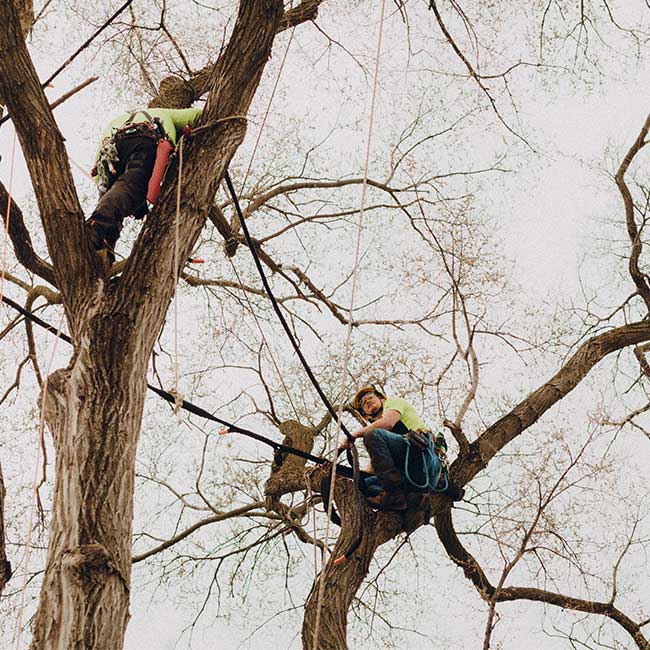
Cabling
Tree cabling uses steel cables to support weak, split, or heavy branches without harming the tree. Professional cable installation preserves valuable trees that might otherwise require removal.
Free alternatives available
Key Benefits
Preserves valuable trees
Reduces branch failure risk
Less expensive than removal
Professional installation
Long-lasting systems
Which System Do You Need?
Question 1 of 3
What is your primary consideration regarding the initial installation cost of the cabling system?
Our Process
Assessment
We evaluate structural weaknesses in the tree.
Design
A custom cabling/bracing system is designed.
Installation
Professional installation of cables or braces.
Monitoring
We recommend periodic inspections.
Frequently Asked Questions
Will cabling damage my tree?
No. Professional cabling, when installed correctly by certified arborists, does not harm the tree. The cable system absorbs movement stresses and actually extends the tree's lifespan by reducing branch failure.
How long does tree cabling last?
Quality cable systems typically last 15-20 years or longer, depending on the cable material and tree growth. We recommend periodic inspections every 2-3 years to ensure effectiveness and replace cables as needed.
Is cabling cheaper than removing my tree?
Yes. Cabling costs a fraction of removal and stump grinding—usually $800-$2,500 depending on the tree size and branch configuration. It also preserves the tree's aesthetic value and environmental benefits.
Can I just hire anyone to cable my tree?
You should hire a certified arborist. Improper cable installation can fail, damage branches, or create liability issues. We're ISA Certified and guarantee professional installation.
Will the cables be visible on my tree?
Professional cabling uses steel cables that are relatively unobtrusive once installed, especially in leafy seasons. We prioritize natural appearance while ensuring structural effectiveness.
Does my homeowner's insurance cover cabling or removal?
Some insurance policies cover tree removal but not cabling. We recommend checking with your insurer about your specific coverage. Cabling is a preservation strategy that may reduce your future liability.
What happens if a cabled branch still fails?
A properly installed cable system greatly reduces the risk of branch failure. If a branch fails despite cabling, it's typically covered under our work warranty, and we'll assess and remedy the issue.
Can cabling prevent the need for tree removal?
Often, yes. Many trees with weak crotches or structural issues can be stabilized through cabling, avoiding removal entirely. We always exhaust preservation options before recommending removal.
Ready to Get Started?
Contact us today for a consultation from one of our certified arborists.
Free alternatives available