Tree Guying
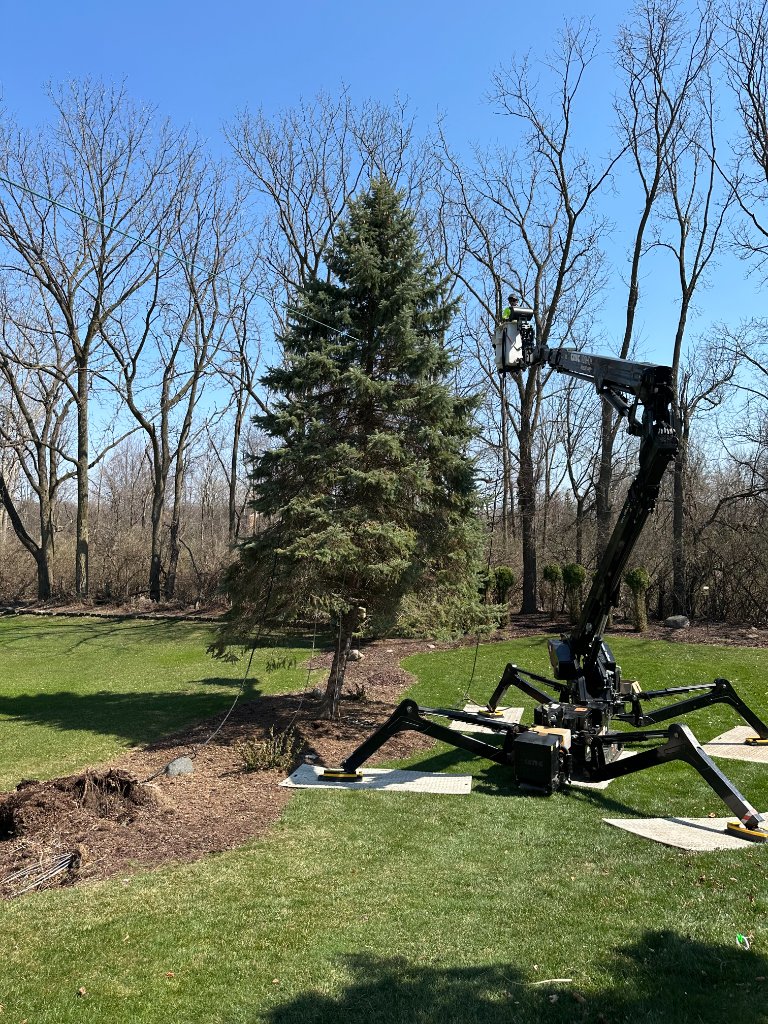
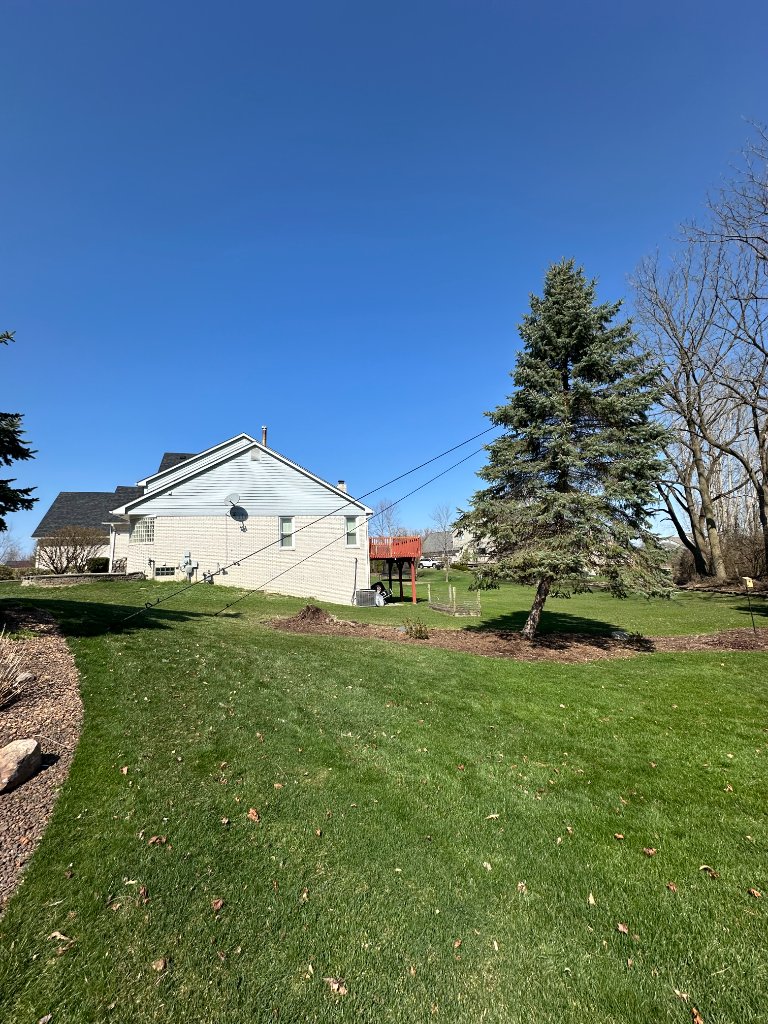
Tree guying is a temporary anchoring technique used to stabilize newly planted trees or trees weakened by storm damage, soil disturbance, or root failure. Using flexible stakes, straps, and ground anchors, we support the tree in an upright position while allowing natural trunk movement — which is critical for developing trunk taper and root strength. Unlike rigid bracing, guying systems are designed to move with the tree, promoting natural wood response without restricting growth. This is a service where technique matters enormously. We've seen the consequences of improper guying firsthand: trees guyed after storm damage that still blew over — or partially blew over — because the anchors were too weak, the angles were wrong, or straps were cinched tight enough to partially girdle the trunk. We were recently called in after exactly this situation: two storm-damaged trees, both previously guyed by another company. One was a total loss. The other — partially blown over — we were able to reposition and stabilize correctly. The homeowners were floored by the difference proper technique made. Guying done right is an investment in the tree's survival. Guying done wrong is expensive false security.
Free alternatives available
Key Benefits
Stabilizes newly planted trees during the critical root establishment period
Prevents wind throw and lean in newly transplanted large-caliper trees
Uses flexible systems that allow trunk movement for natural taper development
Protects investment in high-value specimen plantings
Designed for temporary use — removed once tree establishes independently
Prevents secondary root and trunk damage from prolonged instability
Our Process
Assessment
Evaluate the tree's stability, root zone, soil conditions, and site exposure to determine if guying is appropriate and for how long.
Anchor Placement
Install ground anchors at the correct distance and angle from the trunk to provide balanced multi-directional support.
Strap Installation
Attach wide, padded straps to the lower scaffold branches or trunk to distribute load and prevent bark damage.
Tension & Adjustment
Set proper tension — firm enough to stabilize, loose enough to allow natural trunk flex. Check and adjust seasonally.
Removal
Remove the entire guying system once the tree demonstrates independent stability — typically 1–2 growing seasons after planting.
Frequently Asked Questions
How long does a tree need to be guyed?
Most newly planted trees require guying for 1–2 growing seasons. Larger caliper trees or trees on windy sites may need an additional season. We assess stability before removing the system.
Will guying harm my tree?
Properly installed guying with padded straps and correct tension will not harm your tree. The danger comes from leaving guying in place too long — wires or straps can girdle the trunk if forgotten. We schedule check-ins and removal.
Is guying necessary for all new trees?
Not always. Smaller caliper trees in sheltered locations often establish without guying. We recommend it for large-caliper transplants, exposed sites, and trees showing instability after planting.
What's the difference between guying and bracing?
Guying is temporary external anchoring to the ground — used for newly planted or unstable trees. Bracing is a permanent internal or external support system for trees with structural co-dominant stems or included bark. Different tools for different problems.
Can you guy a tree that's starting to lean?
It depends on the cause. If the lean is new and roots are still viable, corrective guying can work. If the lean is established and the root system has adapted, attempting to straighten it can cause more damage. We assess before recommending.
Does it matter who installs the guying system?
Significantly. We've been called in after storm-damaged trees were guyed by other companies — trees that still blew over, or partially blew over, despite being guyed. The failure points were consistent: anchors too weak to hold under load, cables at ineffective angles that couldn't resist the direction of failure, and straps cinched tight enough to partially girdle the trunk. In one recent case, we were able to reposition and properly stabilize a partially blown-over tree that had been incorrectly guyed. The homeowners had never seen guying done right — the difference was immediate and unmistakable. A guying system is only as good as the arborist who designs and installs it.
Ready to Get Started?
Contact us today for a consultation from one of our certified arborists.
Free alternatives available